IB24044
Project Title: Additive manufacturing and mechanical optimization of ceramic-polymer scaffolds with complex geometries for bone regeneration
Acronym: IB24044
Funding Entity: Junta de Extremadura
Participating Entities: University of Extremadura
Duration: 28/10/2025 – 27/10/2028
Budget: 119 979,10 €
Principal Investigator (PI): Pedro Miranda
Number of researchers: 3
Abstract:
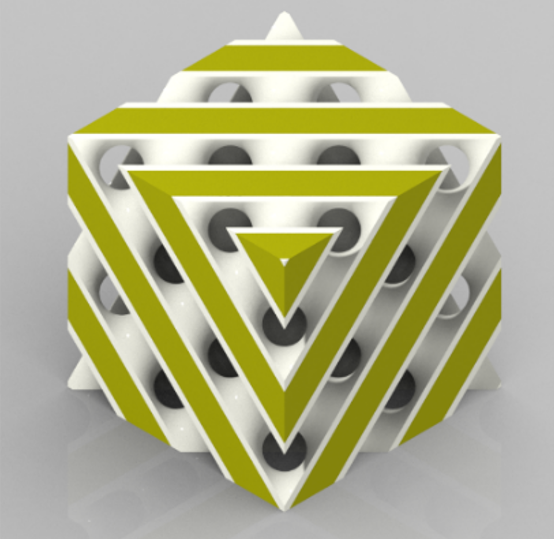
To solve the fixation problems suffered by current orthopaedic implants and to meet the growing demand for materials for bone tissue replacement, it is necessary to develop biomaterials with properties similar to those of the bone they must replace (low density and rigidity but high strength and toughness) and which, in addition, are accepted by the body as a normal matrix of tissue, so that after its implantation, cell penetration and proliferation take place that allows complete tissue regeneration. This project pursues the development and optimization of new biomaterials for application in bone tissue engineering based on additive manufacturing techniques. Specifically, these are scaffolds with bio-inspired pore architecture based on the use of triple periodic minimum surfaces (TPMS). These scaffolds will be manufactured using the Digital Light Processing (DLP) technique from suspensions of bioceramic powders in photocurable resins. The porous structures resulting from the drying, calcination and subsequent sintering of the printed parts will be geometrically optimized with the help of finite element simulations to maximize their mechanical performance. In addition, the toughness of the resulting scaffolds will be improved by partially infiltrating the porosity of the bioceramic scaffolding with a biopolymer. This configuration will allow the best characteristics of both materials to be optimally combined, with the bioceramic (hydroxyapatite, tricalcium phosphate) providing good rigidity, high resistance and excellent osteoconductivity and the biopolymer (e.g. polycaprolactone, PCL) providing toughness and ductility to the structure. The microstructure and three-dimensional architecture of these scaffolds will be adjusted to achieve optimal mechanical behavior without compromising their osteoconductive capacity. The materials resulting from this study could find application in the regeneration of large bone defects even in regions of the skeleton subjected to loads, thanks to their excellent combination of mechanical properties. In addition, they will accelerate the fixation/osseointegration of the implant and guarantee the mechanical integrity of the implant/tissue system throughout the regenerative process. The use of additive manufacturing techniques will also allow implants to be customized to adapt to each patient’s injury, providing personalized regenerative medicine solutions. However, due to the cross-cutting nature of the results obtained in this project, consisting of the development of new advanced materials, with a bold and innovative microstructural design, and novel technologies/manufacturing strategies, its impact could be extended to other applications beyond the biomedical field.